Heritage Directory
Find a heritage record
Search the national directory, narrow it to one Place, or change the order.
Aberdeen Airport Air Traffic Control Tower
Place: Dyce
A stepped concrete control tower gives architectural form to the surveillance work behind Aberdeen’s fixed-wing and offshore helicopter traffic.

Aberdeen Art Gallery
Place: Aberdeen
A landmark pink-and-grey granite gallery, expanded from an 1885 civic institution into a complex of art, memorial and music spaces, then carefully renewed in 2015–19.

Aberdeen Arts Centre
Place: Aberdeen
John Smith’s outstanding Greek Revival former church, distinguished by a giant Ionic portico and Lysicrates-inspired tower, has served Aberdeen as an arts centre since 1963.
Aberdeen Central Library
Place: Aberdeen
A carefully composed granite library gives the civic group on Rosemount Viaduct a quieter scholarly anchor beside the theatre and church.

Aberdeen Custom House
Place: Aberdeen
A refined 1771 granite townhouse, later adapted as Aberdeen’s Custom House, links Georgian domestic architecture with the administration of the city’s expanding harbour.
Aberdeen Maritime Museum and Provost Ross’s House
Place: Aberdeen
Two rare early townhouses survive on the steep Shiprow, preserving the scale of Aberdeen’s pre-modern harbour quarter while forming part of a museum that explains the city’s relationship with the sea.
Aberdeen Mercat Cross
Place: Aberdeen
A richly carved seventeenth-century market cross makes Aberdeen’s burgh identity visible in Castlegate: part proclamation platform, part civic sculpture and part symbol of historic trading rights.
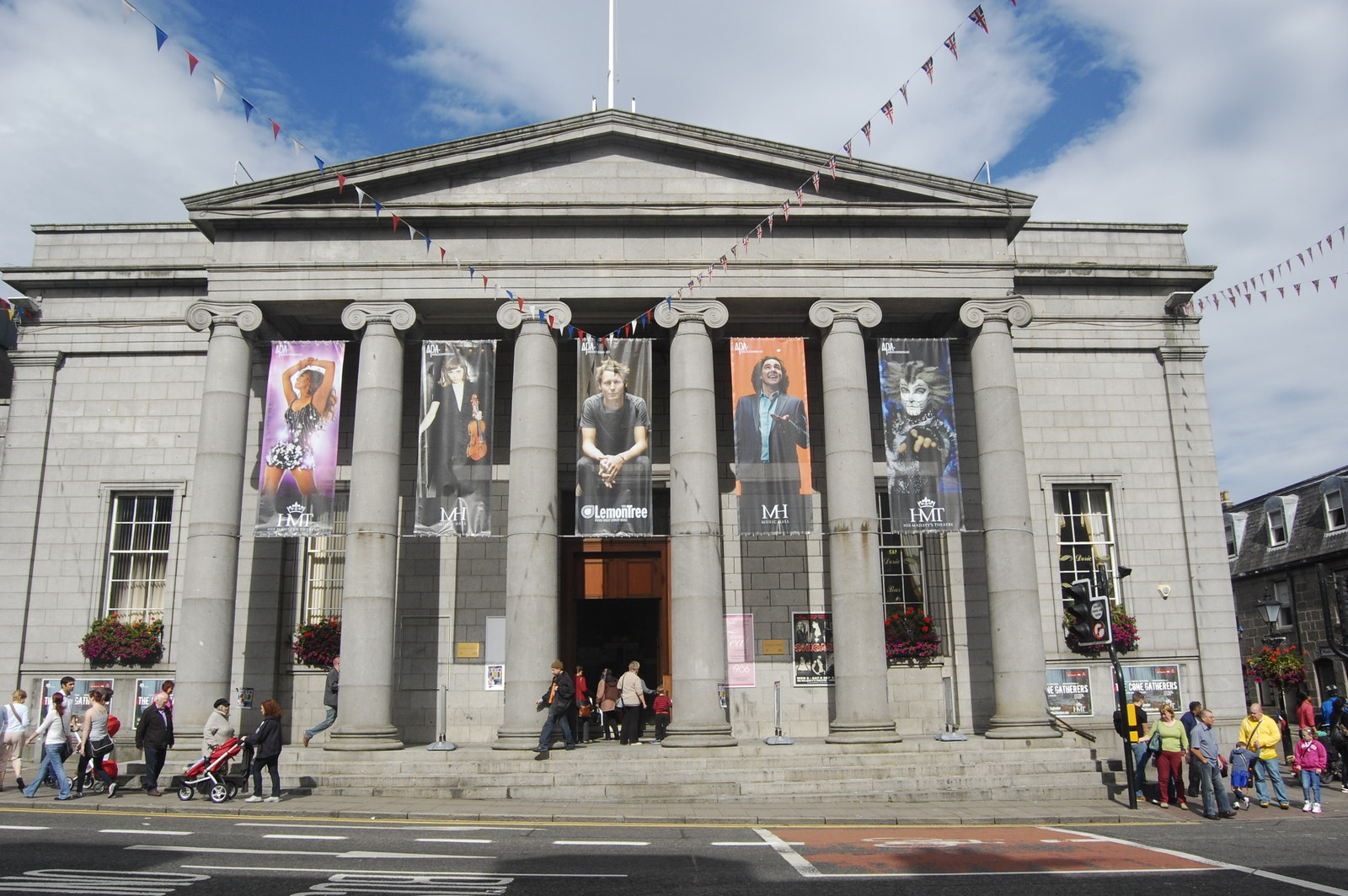
Aberdeen Music Hall
Place: Aberdeen
Archibald Simpson’s monumental granite Assembly Rooms and James Matthews’s celebrated concert hall form a richly layered venue that has anchored Aberdeen’s public cultural life since the 1820s.
Aberdeen Railway Station
Place: Aberdeen
A polygonal Beaux-Arts entrance and long train-shed complex mark the point where regional rail travel meets Aberdeen’s granite city centre.
Aberdeen Science Centre
Place: Aberdeen
A granite baths turned tram depot now houses hands-on science learning beside Aberdeen Beach.
Aberdeen Sheriff Court Annex and High Court of Justiciary
Place: Aberdeen
Aberdeen’s first fully dressed granite ashlar building now accommodates High Court and sheriff court jury sittings.
Aberdeenshire Canal Remains at Tillybrig
Place: Dyce
A shallow cutting and embankments are rare ground-level evidence for the canal that preceded the railway between Aberdeen and Inverurie.
Aberdeenshire Canal Remains near Brae of Kintore
Place: Kintore
A surviving bank, channel and numbered milestone preserve part of the short-lived canal that linked Inverurie with Aberdeen harbour.
Aberdour Castle
Place: Aberdour
One of Scotland’s earliest standing stone castle buildings grew through tower-house, residential-range and garden campaigns over five centuries.
Aberdour Harbour Pier
Place: Aberdour
A stone pier developed from an estate shipping point into a harbour for trade, steam excursions and present-day leisure craft.
Aberdour House
Place: Aberdour
A seventeenth-century house beside the castle was enlarged for the Morton family and later adapted as private homes.
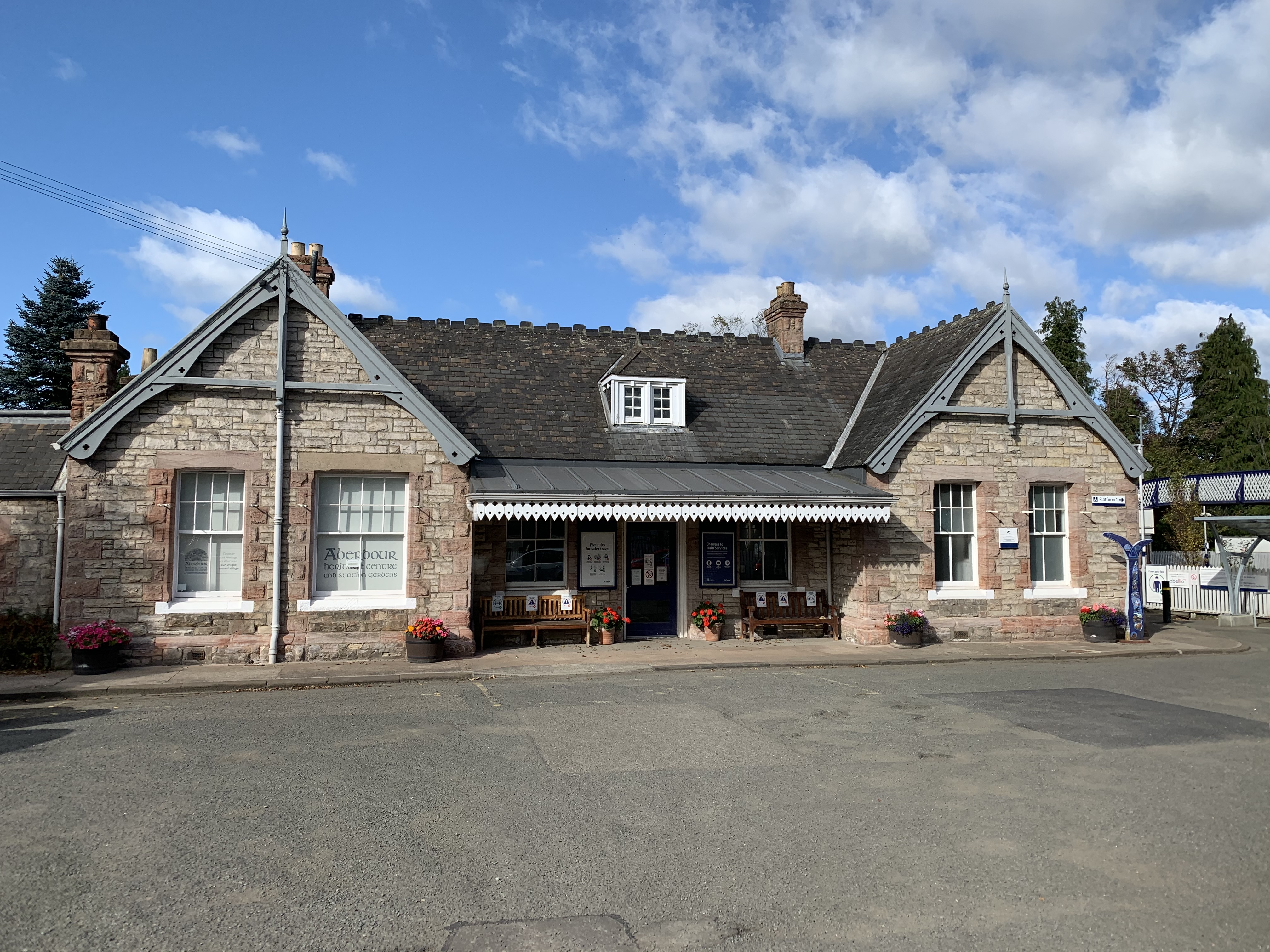
Aberdour Railway Station
Place: Aberdour
A carefully detailed late Victorian station helped transform Aberdour’s accessibility and retains a strong group of railway structures.
Aberfeldy Distillery
Place: Aberfeldy
A working late-Victorian distillery retains its pagoda kiln, long rubble ranges, chimney and production character while welcoming visitors.
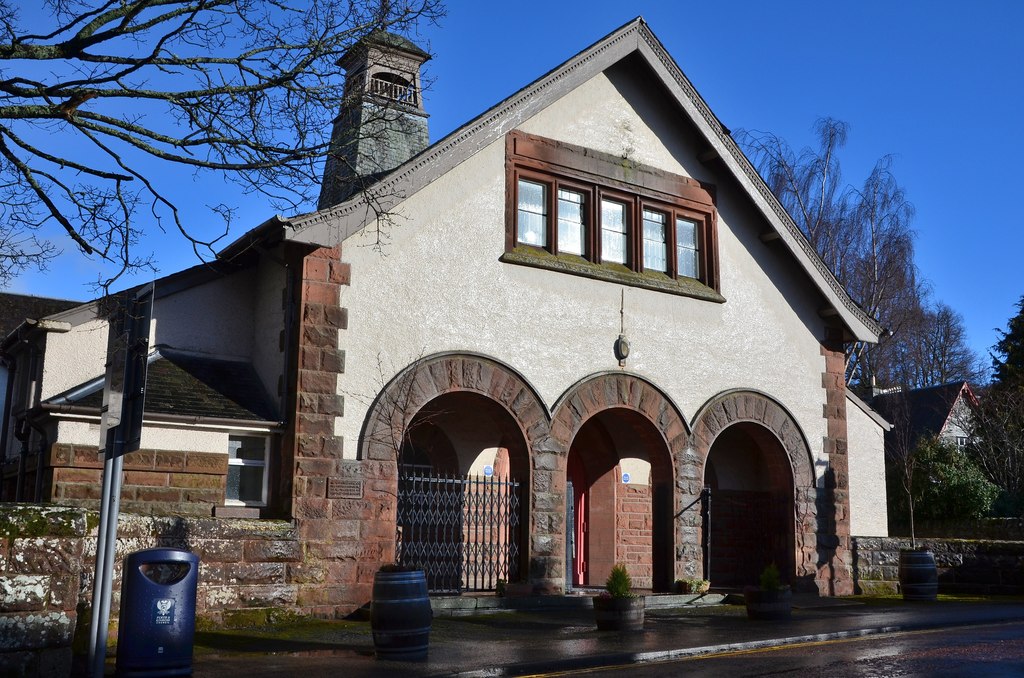
Aberfeldy Town Hall
Place: Aberfeldy
James M MacLaren’s bold town hall combines a Romanesque loggia, great hall and oversized roof ventilator in an unusually inventive civic design.
Aberfeldy Watermill
Place: Aberfeldy
A rare urban watermill retains its overshot wheel and milling machinery while sustaining a lively new use as a bookshop, gallery and café.
Abernethy Parish Church
Place: Abernethy
A restrained early nineteenth-century church stands beside the round tower, continuing the centre’s long ecclesiastical identity in a distinct architectural language.
Abernethy Round Tower and Pictish Symbol Stone
Place: Abernethy
A rare Irish-style round tower anchors Abernethy’s historic centre and preserves a visible link with its early ecclesiastical importance.
Abernethy War Memorial Cross
Place: Abernethy
A twentieth-century memorial adopts the older civic form of a market cross on the site associated with Abernethy’s former Town House.