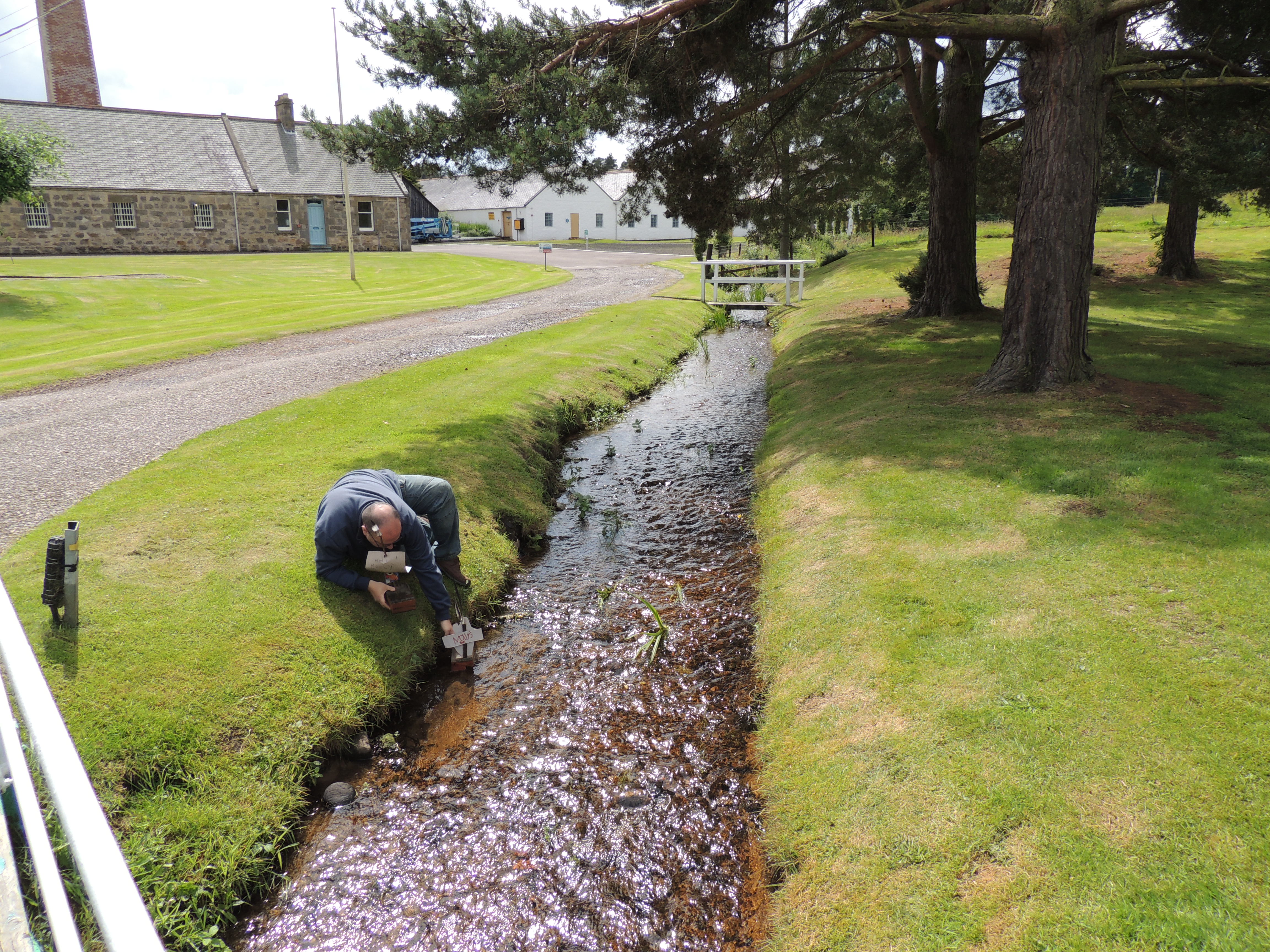


A remarkably complete late-Victorian distillery preserves the buildings and working sequence of malt-whisky production.
Quick facts
- Date
- 1898–1901
- Architect / designer
- Charles C Doig
- Type
- Exceptionally complete malt-whisky distillery complex
- Designation
- Listed building, Category A (LB8689)
- OS grid reference
- NJ 03611 56672
Architecture and continuing use
Doig’s planned complex groups kiln, maltings, mash house, still house, warehouses and service buildings around a coherent industrial yard. Stone, brick, timber and distinctive ventilation structures reveal each stage of production.
Its story
The distillery was laid out from 1898 and entered production in 1899. Production ceased in 1983; preservation retained an unusually intact whisky-making site that is now cared for and interpreted as a visitor attraction.
A production plan with equipment from several dates
The malt barn, kiln, mash house, tun room, still house and filling store form the eastern production range, with bonded warehouses to the west. The kiln’s high ventilator and the still-house chimney identify different operations in the skyline. Between and beside the ranges, barrel rails, a hoist and railway traces explain how materials and casks moved through the site.
The surviving equipment reflects several phases of the distillery’s working life. Historic Environment Scotland records replacements of the copper stills, mash tun and timber washbacks between 1937 and 1969. The long malt barn and repeated warehouse gables enclose different spaces for processing grain, distilling spirit and storing casks.
What to notice
- The pagoda-like kiln ventilator associated with Charles Doig.
- The production range running from maltings and kiln to mash house and still house.
- Contrasts between stone walls, brickwork and functional roof forms.
- Warehouse gables, barrel-handling equipment and the contrast between original fabric and later machinery.
Reading the surroundings
Historic Environment Scotland publishes tour and access information. The site is managed with Aceo Distillers; check current booking and temporary restrictions before travelling.
Timeline
- 1898 Construction began to Charles Doig’s purpose-planned distillery design.
- 1899 The first spirit ran through the new production complex.
- 1983 Commercial distilling ceased, leaving the plant unusually complete.
- 2026 Guided visits continue to interpret the preserved whisky-making process.
What we know — and what remains uncertain
Visitor arrangements can change during management and conservation work; production has not resumed as an ordinary commercial distillery.
Sources & further reading
- Historic Environment Scotland: Dallas Dhu Historic Distillery, LB8689 — Designation category, mapped location, construction phases, fabric, authorship and architectural or historical interest.
- Historic Environment Scotland: Dallas Dhu — Current management, significance, tours and visitor information.
Location
OS grid reference NJ 03611 56672 · Location confidence: High: the statutory designation supplies an official mapped National Grid Reference and the current source confirms the Place relationship or present identity. · Select the marker to open its satellite view in Google Maps. On desktop, drag Pegman (the yellow figure) onto a blue road. On mobile, turn on the Street View layer and tap a blue road. Other photo markers may be user-contributed.
Suggest a marker correction
Suggest a more accurate position
The teal marker is the current published position. The orange marker starts slightly to its right so both remain visible; this is only a visual starting position. Tap the correct place on the map or drag the orange marker. Sending this form creates a private review entry only; it does not move the published marker.
Check this area in Google Maps Choose the Satellite layer there if useful.
Map: © OpenStreetMap contributors. You can also enter checked coordinates below.