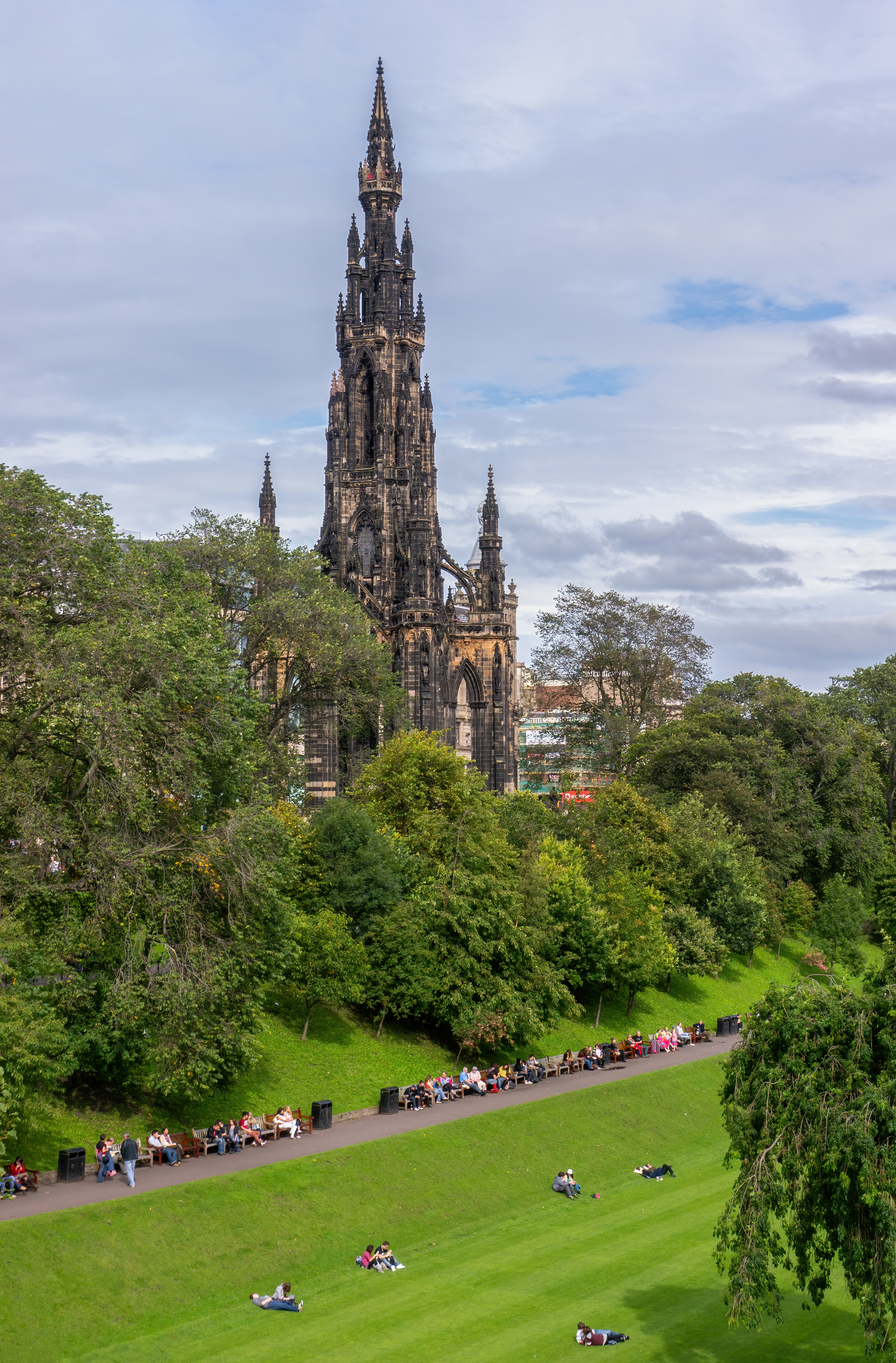
Scott Monument, September 2011. Photograph: Reinhold Möller (Ermell). Source: Wikimedia Commons. Licence: CC BY-SA 4.0.

A sixty-one-metre Gothic spire commemorates Walter Scott through architecture, sculpture and elevated views, forming a dark, intricate counterpoint to the New Town.
Quick facts
- Date
- Built 1840–1844; sculpture and completion work continued into 1846
- Architect / designer
- George Meikle Kemp; completed after his death by Thomas Bonnar; principal Scott statue by Sir John Steell
- Type
- Gothic public monument and viewpoint
- Designation
- Category A listed monument (LB27829)
- OS grid reference
- NT 25585 73904
Why it matters
The Scott Monument is both a memorial to Sir Walter Scott and one of the defining structures of Edinburgh’s New Town skyline. George Meikle Kemp won the design competition with a Gothic scheme that made literature, national identity and medieval architectural imagery inseparable. The monument was begun in 1840 and completed after Kemp’s death.
Its importance goes beyond height or visual drama. The structure combines architecture, sculpture and an experience of ascent. Scott sits at the centre beneath the great canopy, while characters and figures associated with his writing populate the stonework above.
Design and construction
The monument is built from Binny sandstone and rises as a clustered, pinnacled tower over an open central arch. Flying buttress-like elements, niches, crockets and traceried openings reduce the apparent mass as the composition climbs. The darkened surface—produced by the stone and historic urban pollution—has become part of its familiar appearance, though it also records material weathering.
Sir John Steell’s marble statue of Scott and his dog Maida occupies the central platform. A large programme of carved figures extends the commemoration across the monument. Inside, a narrow spiral stair rises through a sequence of viewing stages. The constricted climb and widening prospects make bodily experience part of the design.
What to notice
- Scott and Maida: the seated marble group is the calm centre beneath the restless Gothic canopy.
- The clustered silhouette: pinnacles and buttress forms make the tower appear to narrow progressively.
- The sculptural programme: figures from Scott’s works are integrated into the architecture at many levels.
- The colour of the stone: darkening is historically familiar but also reveals the material consequences of the city environment.
- The ascent: where authorised access permits, successive platforms turn the skyline into part of the memorial experience.
Change and conservation
The monument has required repeated repair because its exposed, intricately carved sandstone is vulnerable to weathering. Conservation must balance public safety, retention of original carving and the risk that aggressive cleaning or replacement could erase historic character. Visitor access can close for maintenance or operational reasons.
Visiting and access
The monument stands in Princes Street Gardens and can always be appreciated externally from public space. Interior ascent and opening arrangements should be checked with the City of Edinburgh Council before making a special journey.
Sources & further reading
- Historic Environment Scotland: Scott Monument, LB27829 — Designation, grid reference, dimensions, materials, architects, sculpture and chronology.
- City of Edinburgh Council: Scott Monument — Current council management and visitor status.