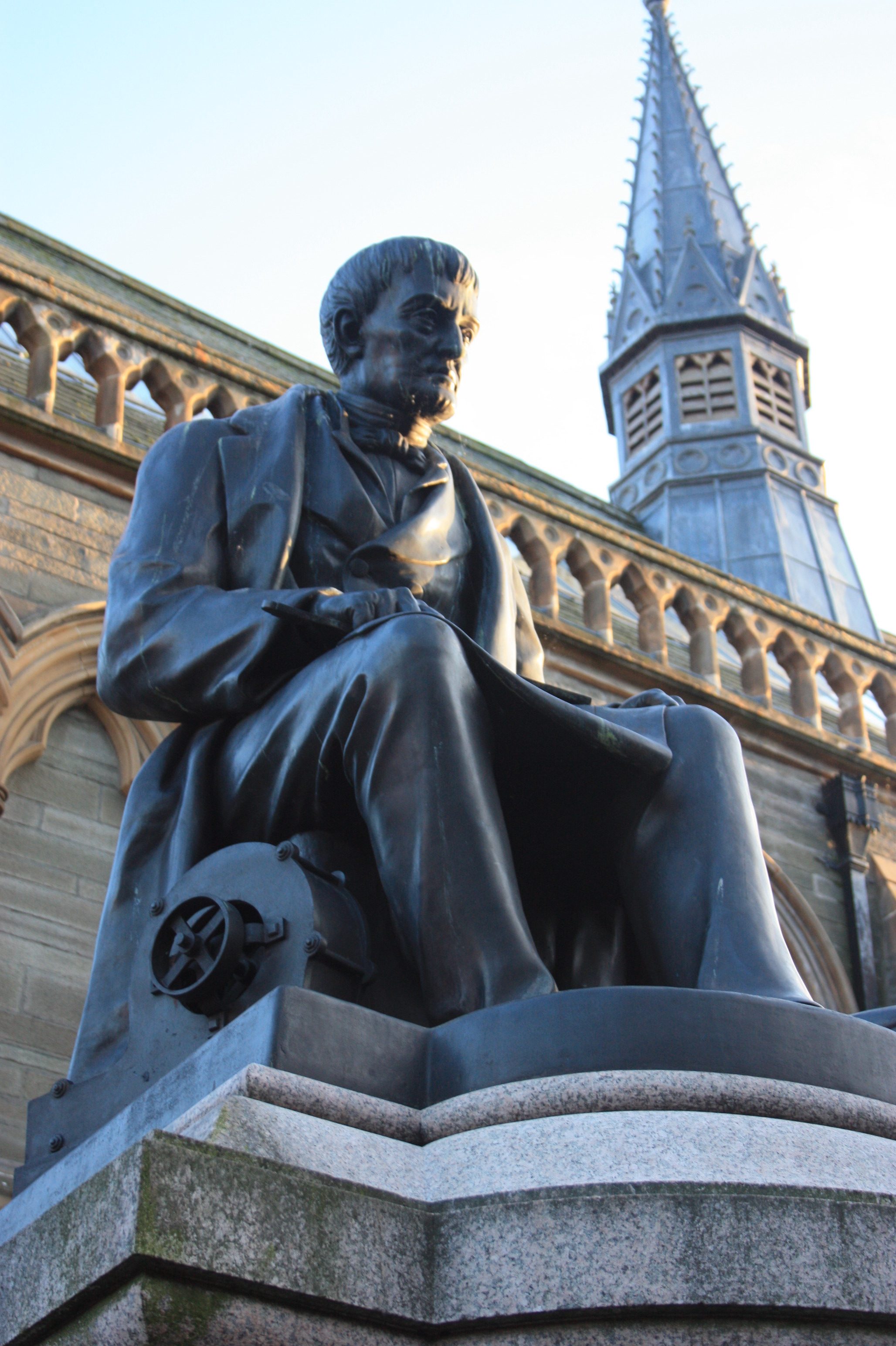


A seated bronze portrait of James Carmichael is accompanied by a cylinder and fan blower associated with his engineering work.
Quick facts
- Date
- Erected 1876
- Architect / designer
- John Hutchison; cast by R. Masefield and Company
- Type
- Bronze seated industrialist with engineering attributes on a granite pedestal
- Designation
- Listed building, Category B (LB24930)
- OS grid reference
- NO 40283 30509
Engineering and civic commemoration
John Hutchison’s seated bronze statue, erected in 1876, commemorates James Carmichael, a Dundee engineer and industrialist associated with textile machinery. A cylinder and fan blower beside the figure identify his technical work within the city’s nineteenth-century industrial economy.
Architecture and history
John Hutchison modelled Carmichael as a seated bronze figure, composed for viewing from several sides. The chair, clothing and pose convey authority without military or aristocratic imagery.
A cylinder and fan blower refer to machinery associated with his work, bringing industrial technology into the sculptural programme. The bronze was cast by R. Masefield and Company and placed on a substantial pedestal that raises the figure within Albert Square.
The monument’s relationship with surrounding civic buildings turns individual commemoration into part of a broader urban narrative of learning, industry and public culture.
Carmichael’s engineering extended from flax-spinning engines to Tay steam ferries and machine tools. The fan blower perfected in 1829 delivered a steadier blast of air for foundry furnaces and smiths’ forges than traditional bellows. This is the industrial process represented by the object beside the seated figure.
What to notice
- The seated pose: calm authority replaces heroic action.
- The engineering objects: cylinder and blower identify the source of Carmichael’s civic standing.
- The bronze modelling: clothing, hands and equipment are handled with differing textures.
- The pedestal: height and inscriptions mediate between sculpture and square.
- The Albert Square setting: the statue participates in Dundee’s civic and cultural ensemble.
Change and conservation
Public monuments experience weathering, surface change and occasional relocation or landscape alteration. The surrounding pedestrian arrangements may evolve; the stable heritage interest lies in Hutchison’s bronze, its engineering attributes and civic context.
Location and Photos
The statue stands in public space and can be viewed from the surrounding pedestrian area. Respect any temporary maintenance or event barriers.
A curious detail
James and Charles Carmichael allowed unrestricted use of their fan-blowing machine. Members of the iron trade recognised this in 1841 by presenting silver plate at a Glasgow banquet.
Sources & further reading
- Historic Environment Scotland: James Carmichael Statue, LB24930 — Designation status, mapped location, construction phases, fabric, authorship and architectural or historical interest.
- Dundee City Council: Central Conservation Area appraisal — Official civic setting, conservation context and Albert Square monument group.
- The McManus — Current public institution and visitor setting framing Albert Square.
- S. G. E. Lythe — James Carmichael, Millwright, Abertay Historical Society, 1968, pp. 4–5 — Engineering work, 1829 fan blower, its use in foundries/forges and recognition of unrestricted use at the 1841 Glasgow banquet.