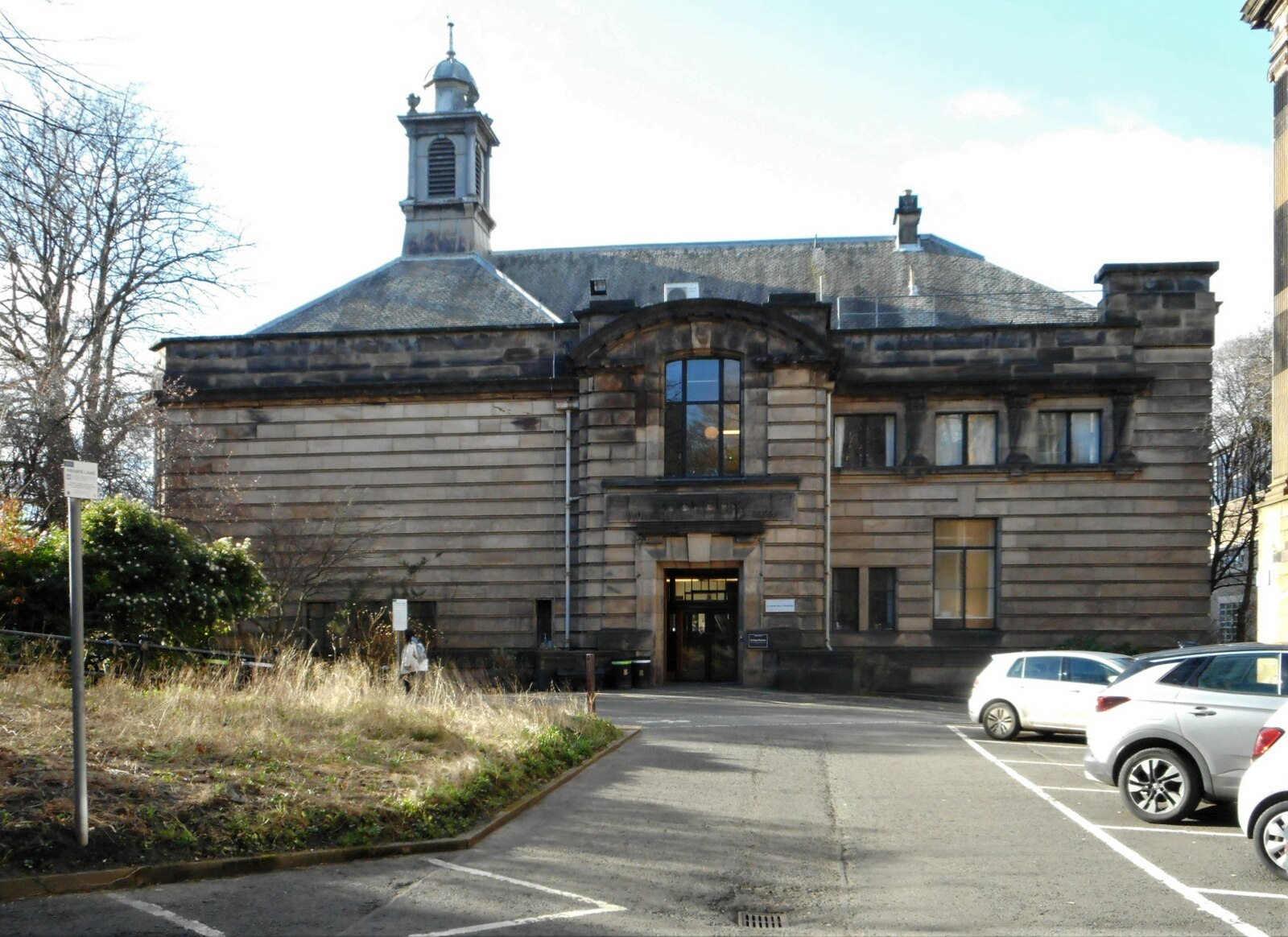
Image: Graham Kerr Building by Richard Sutcliffe, sourced from Wikimedia Commons and licensed under CC BY-SA 2.0.

A monumental zoology building combines late Baroque grandeur with early modern planning around laboratories and a top-lit museum.
Quick facts
- Date
- 1923–1927
- Architect / designer
- Sir John James Burnet, Burnet Son & Dick; detailed work associated with Norman Aitken Dick
- Type
- Neo-Baroque university zoology department and museum
- Designation
- Listed building, Category A (LB32928)
- OS grid reference
- NS 56625 66632
Architecture and continuing use
A channelled ashlar U-plan is marked by a projecting entrance, open segmental pediment, cupola and long pilastered elevations. Within, broad stairs, tiled circulation and a museum originally lit from above organised specialist teaching and collections.
Its story
Professor John Graham Kerr campaigned for modern zoology accommodation from 1903. War delayed construction until the 1920s, when Burnet’s practice produced a building that now supports university science and the Hunterian Zoology Museum.
Different rooms for observation, display and teaching
HES’s 2010 interior survey distinguishes three kinds of scientific space: north-lit laboratories, a tiered lecture theatre and a museum room arranged like a classical temple. Its colonnaded walls and compartmented ceiling gave specimens a formal architectural setting. The museum originally received diffuse light from a cupola, but the roof was subsequently altered. The broad stair, recorded with carved animal heads on its timber handrail, linked these functions. This historic survey describes the design; access to academic rooms remains separate from museum admission.
What to notice
- Entrance panel inscribed “Zoology 1923”.
- Louvred cupola above the entrance range.
- The museum’s classical room arrangement and broad circulation where public access permits.
- The museum’s original top-lighting arrangement and later roof alterations.
Visiting and accessibility
The Hunterian Zoology Museum is free and currently opens Monday–Friday, 9am–5pm. The museum is inside the working Graham Kerr Building; laboratories, offices and teaching areas are not implied to be open to visitors. Check the Hunterian notices page for temporary closures and public-holiday arrangements.
There are three steps at the building entrance, with a chairlift available, and another three steps into the main museum room, where a ramp is available. The Zoology Museum does not have an accessible toilet. Visitors with particular access requirements should consult the official access guide before travelling.
Timeline
- 1903 John Graham Kerr began campaigning for a purpose-built zoology department.
- 1923–1927 Burnet, Son & Dick completed the new department and museum.
- 2024 Refurbished teaching and circulation spaces were presented during Glasgow Doors Open Day.
- 2026 The University continues to house teaching, research and the Hunterian Zoology Museum here.
What we know — and what remains uncertain
Some western additions post-date Burnet’s principal campaign, and university access is divided between public museum and restricted academic areas.
Sources & further reading
- Historic Environment Scotland: Graham Kerr Building, LB32928 — Designation category, mapped location, construction phases, fabric, authorship and architectural or historical interest.
- University of Glasgow: Graham Kerr Building architecture — Official architectural history, construction context and continuing zoology use.
- Hunterian Zoology Museum — Current museum displays, opening, access and visitor information.
Location
OS grid reference NS 56625 66632 · Location confidence: High: the HES designation provides an official mapped National Grid Reference and the current source confirms the Place relationship or present identity. · Select the marker to open its satellite view in Google Maps. On desktop, drag Pegman (the yellow figure) onto a blue road. On mobile, turn on the Street View layer and tap a blue road. Other photo markers may be user-contributed.
Suggest a marker correction
Suggest a more accurate position
The teal marker is the current published position. The orange marker starts slightly to its right so both remain visible; this is only a visual starting position. Tap the correct place on the map or drag the orange marker. Sending this form creates a private review entry only; it does not move the published marker.
Check this area in Google Maps Choose the Satellite layer there if useful.
Map: © OpenStreetMap contributors. You can also enter checked coordinates below.