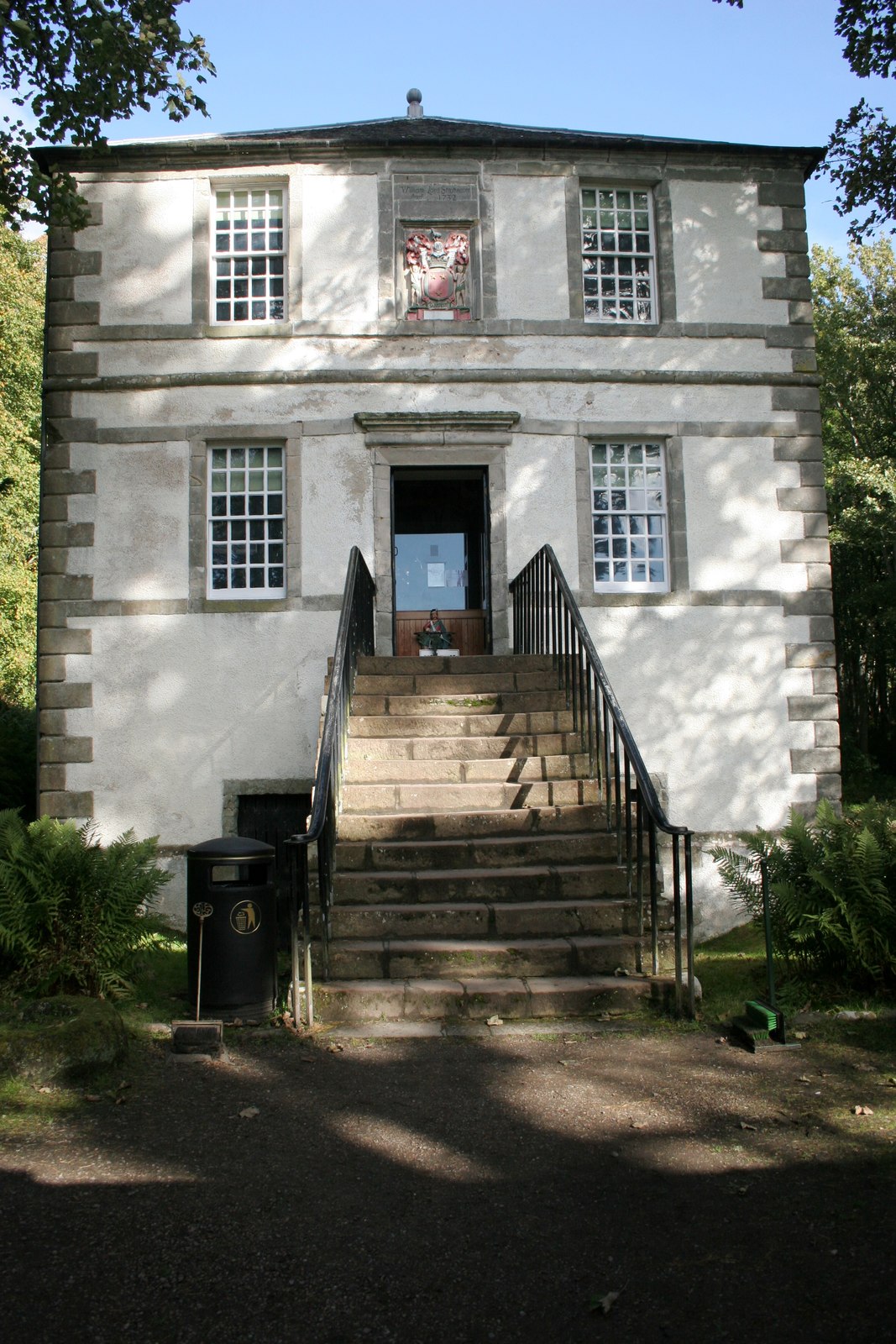
Image: Dunrobin Castle Garden Pavilion by Richard Sutcliffe, sourced from Wikimedia Commons and licensed under CC BY-SA 2.0.
.jpg)
A formally detailed 1732 pavilion and enclosed garden preserve an early phase of estate improvement below the later baronial castle.
Quick facts
- Date
- 1732
- Architect / designer
- Built for William, Lord Strathnaver; designer unrecorded
- Type
- Two-storey garden pavilion, museum and walled garden
- Designation
- Listed building, Category A (LB7045)
- OS grid reference
- NC 85180 00774
Architecture, archaeology and continuing use
The square pavilion rises two storeys over a raised basement, with a three-bay front, central stair and armorial plaque. Harl-pointed rubble, polished dressings, rusticated quoins and a shallow pyramidal roof face a high-walled garden entered through ball-finialled gates.
Its story
The pavilion was built for William, Lord Strathnaver, who became Earl of Sutherland in 1733. It predates Barry's transformation of the castle by about a century and now serves as a museum within the managed visitor route.
Why it is included
Category A listing protects a well-preserved early eighteenth-century garden building, gates and walls that reveal the estate landscape before the castle's Victorian enlargement.
What to notice
- The 1732 armorial plaque in the central blind window.
- Rusticated quoins and horizontal bands organising the front.
- Ball-finialled gate piers linking pavilion and garden.
Reading the surroundings
Access is included within Dunrobin Castle's advertised seasonal ticket. Use the managed paths, do not enter closed garden areas and check current accessibility information before visiting.
Timeline
- 1732 The estate completed the garden pavilion for Lord Strathnaver.
- 1733 Its patron succeeded as Earl of Sutherland.
- 19th century Later castle terraces and steps altered the garden's wider setting.
- 2026 The building continued as the museum on the ticketed route.
What we know — and what remains uncertain
The national record identifies the patron but not a designer, and the dates of the rear museum extension and some garden alterations remain unstated.
Sources & further reading
- Historic Environment Scotland: Dunrobin Castle Garden Pavilion and Walled Garden, LB7045 — Designation status, mapped location, date, fabric and architectural or archaeological interest.
- Dunrobin Castle: plan a visit — Current ticketed access to the museum and gardens, opening season and visitor arrangements.
Location
OS grid reference NC 85180 00774 · Location confidence: High: the national designation supplies an official mapped National Grid Reference; an additional source confirms the Place relationship, history or current identity. · Select the marker to open its satellite view in Google Maps. On desktop, drag Pegman (the yellow figure) onto a blue road. On mobile, turn on the Street View layer and tap a blue road. Other photo markers may be user-contributed.
Suggest a marker correction
Suggest a more accurate position
The teal marker is the current published position. The orange marker starts slightly to its right so both remain visible; this is only a visual starting position. Tap the correct place on the map or drag the orange marker. Sending this form creates a private review entry only; it does not move the published marker.
Check this area in Google Maps Choose the Satellite layer there if useful.
Map: © OpenStreetMap contributors. You can also enter checked coordinates below.