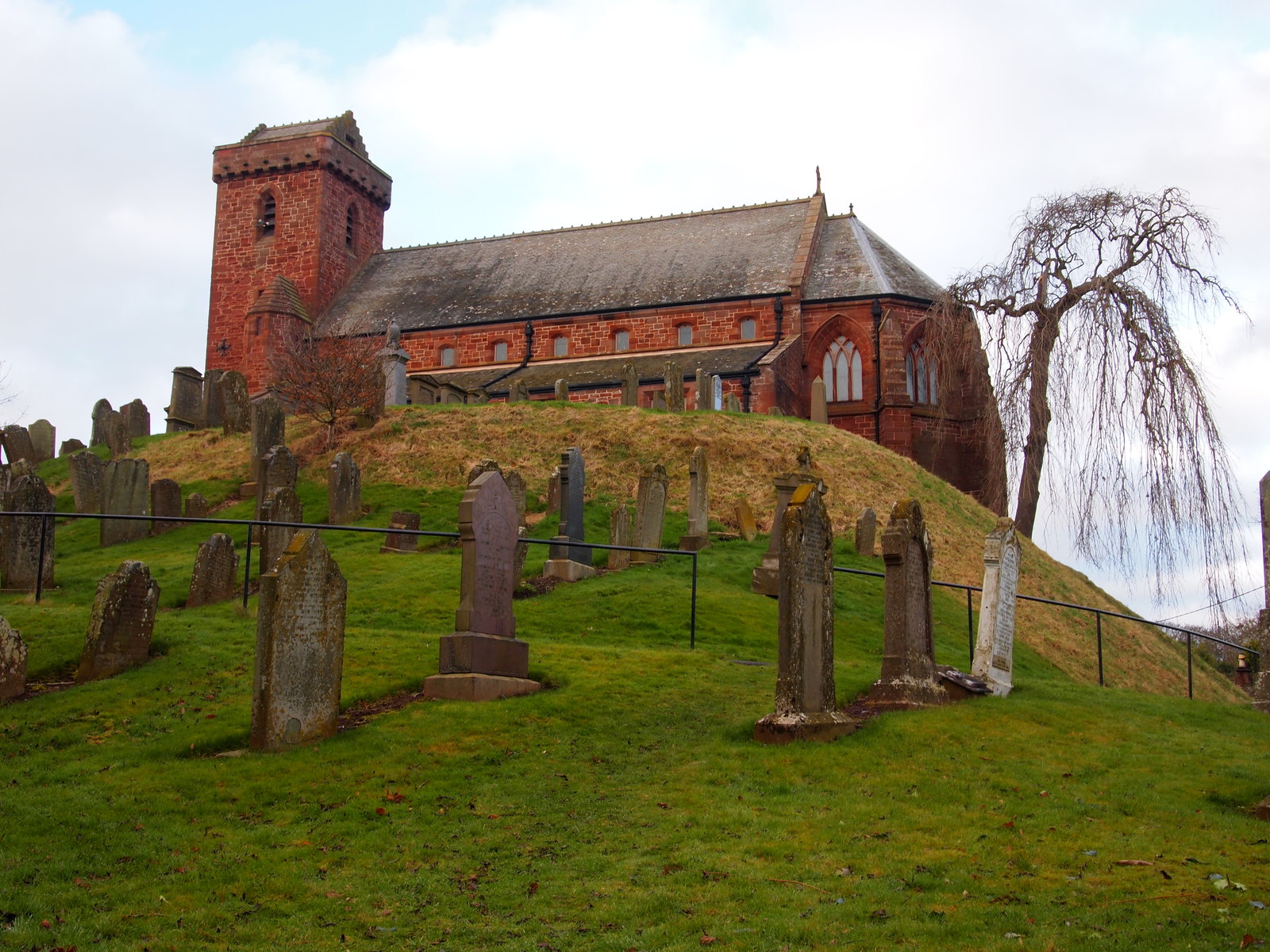
Image: St Vigeans Parish Kirk by Chris Andrews, sourced from Wikimedia Commons and licensed under CC BY-SA 2.0.

A living parish church crowns the village knoll, combining medieval masonry, Pictish associations and Rowand Anderson’s nineteenth-century restoration.
Quick facts
- Date
- Medieval fabric from the twelfth and fifteenth centuries; restored 1871–1872
- Architect / designer
- Medieval builders not identified; restoration by Robert Rowand Anderson
- Type
- Aisled medieval parish kirk with western tower and polygonal apse
- Designation
- Listed building, Category A (LB4770)
- OS grid reference
- NO 63842 42912
Architecture and continuing use
The aisled oblong body incorporates twelfth-century gables, later arcading and a fifteenth-century tower. Rowand Anderson’s restoration and polygonal apse organise fabric accumulated over many centuries.
Its story
Christian use of the site reaches back to the Pictish period, and a medieval church served the parish before Arbroath’s growth. The 1871–72 restoration preserved and reworked the old fabric; carved stones from the area are displayed in the nearby museum.
Why it is included
It is a Category A living church whose architecture connects early Christian Angus, medieval parish life and a major Victorian restoration architect.
What to notice
- Elevated churchyard setting.
- Medieval tower and restored aisled body.
- Older carved stones incorporated into the fabric.
Reading the surroundings
Attend advertised worship or contact the congregation before a separate visit. Use churchyard paths with care and respect services, graves and safeguarding arrangements.
Timeline
- Medieval fabric from the twelfth and fifteenth centuries Christian use of the site reaches back to the Pictish period, and a medieval church served the parish before Arbroath’s growth. The 1871–72 restoration preserved and reworked the old fabric; carved stones from the area are displayed in the nearby museum.
- Present Active Church of Scotland worship centre with advertised Sunday services.
What we know — and what remains uncertain
HES identifies ecclesiastical use and the congregation advertises current services, but times and the use of church versus hall can vary; check the current worship page.
Sources & further reading
- Historic Environment Scotland: St Vigeans Parish Kirk, LB4770 — Designation status, mapped location, construction phases, fabric, authorship and architectural or historical interest.
- Arbroath and District Church of Scotland: worship — Current St Vigeans service time, worship-centre identity and contact details.
- Arbroath and District: history of St Vigeans — Congregational account of early worship, medieval fabric and Rowand Anderson restoration.
Location
OS grid reference NO 63842 42912 · Location confidence: High: the statutory designation supplies an official mapped National Grid Reference and the current source confirms the Place relationship or present identity. · Select the marker to open its satellite view in Google Maps. On desktop, drag Pegman (the yellow figure) onto a blue road. On mobile, turn on the Street View layer and tap a blue road. Other photo markers may be user-contributed.
Suggest a marker correction
Suggest a more accurate position
The teal marker is the current published position. The orange marker starts slightly to its right so both remain visible; this is only a visual starting position. Tap the correct place on the map or drag the orange marker. Sending this form creates a private review entry only; it does not move the published marker.
Check this area in Google Maps Choose the Satellite layer there if useful.
Map: © OpenStreetMap contributors. You can also enter checked coordinates below.